Who do you think you are?
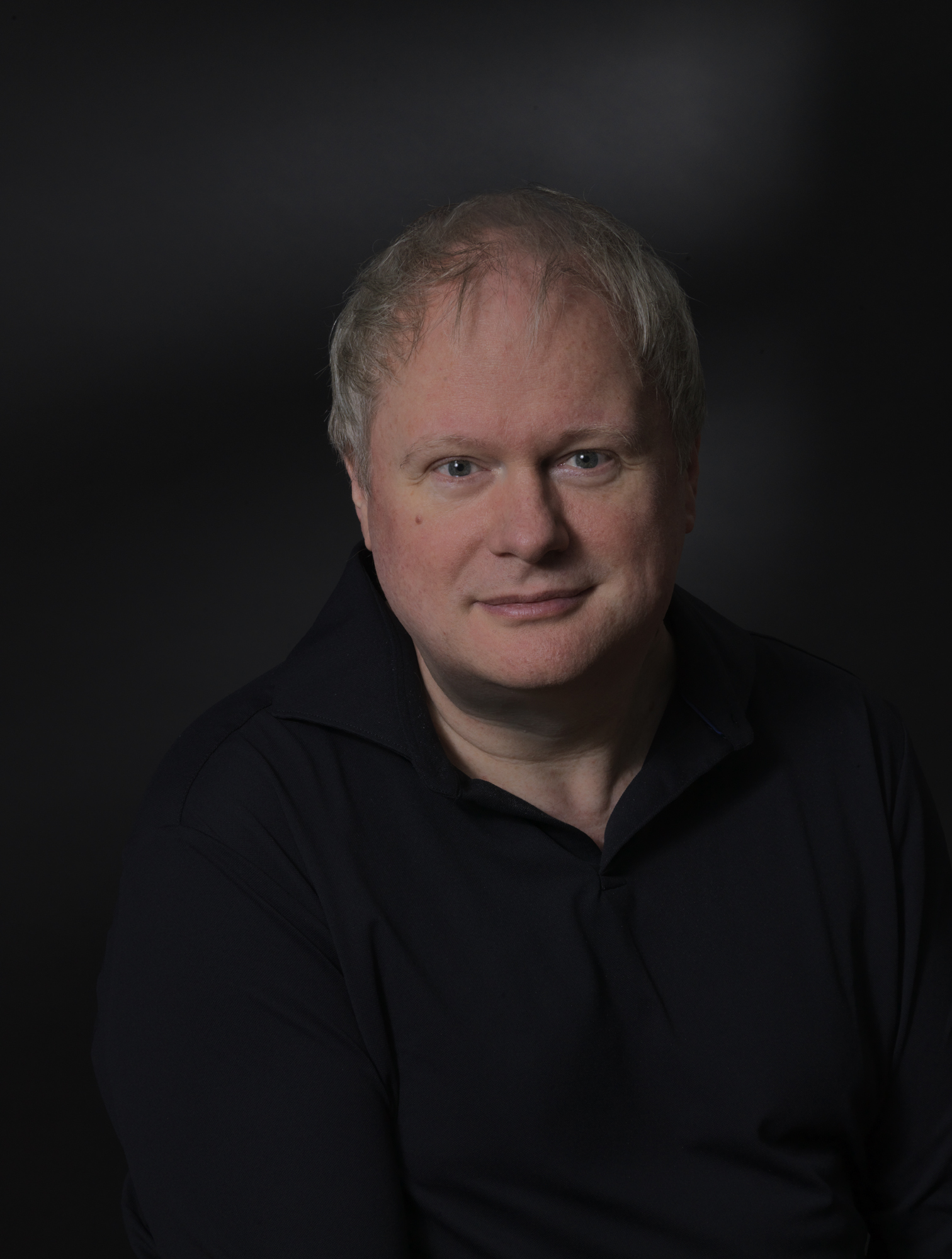
My name is Joost van der Leij and every time I try to improve the quality of NLP education, I am asked who I think I am to decide what NLP is. The reality is that I do not determine what NLP is; NLP itself determines what NLP is. This is because NLP is normative. In other words, NLP sets requirements for what qualifies as NLP.
Unfortunately, much of what is taught as “NLP” barely meets these requirements and therefore does not actually qualify as NLP. It is also true that when I train other NLP trainers to teach NLP at a higher level through my NLP continuing education programme, I never, not once, hear that I am mistaken. Once I explain the requirements built into NLP and how these allow us to distinguish good NLP from things that have nothing to do with NLP, every NLP trainer understands.
In this article, I explore the requirements that NLP sets for itself in more depth. I also explain more about who I am. This is certainly not intended as boasting, but to clarify why I am uniquely positioned to improve the quality of NLP education.
Philosophy rather than psychology
To begin with, NLP is based more on philosophy than on psychology. In fact, NLP is opposed to Freudian psychology. Richard Bandler, the creator of NLP, wanted to study computer science in the late 1960s. As a young hippie born in San Francisco, he wanted to study at the University of California, Santa Cruz, because it was the biggest hippie university. However, the computer science programme did not go ahead. Bandler therefore enrolled in two subjects as a stopgap: psychology and philosophy. The development of NLP owes more to Richard Bandler’s background in philosophy than to his background in psychology.
I am an academically trained philosopher myself, in fact, I have undertaken master’s-level philosophy studies several times. Within philosophy, I have two specialisations: the philosophy of mind and action, and the philosophy of statistics. As you can see, these specialisations place me within analytic philosophy. The philosophy of language is also an important part of this tradition. When I learned the Meta Model in 2000, I immediately recognised all its terminology, because these were all terms from the philosophy of language of the 1950s and 1960s. People often assume that these terms originate with Chomsky, but that is not the case. These concepts come from other sources within the philosophy of language. Thanks to my philosophical background, I understand the Meta Model more deeply than most NLP trainers, which enables me to help them understand it better.
Licensed NLP Master Trainer®
In 2000, I also encountered Richard Bandler for the first time. I travelled to Orlando in the United States on a whim to be trained by Richard Bandler and his right-hand man, John La Valle. As a philosopher, I was very sceptical beforehand. But after just five minutes of experiencing Richard Bandler in action, I was completely won over and decided to master NLP. I threw myself into it enthusiastically and discovered that I also had a talent for NLP. This eventually led to Richard Bandler personally certifying me as a Licensed NLP Master Trainer® in Amsterdam.
Having assisted at many training programmes run by Richard Bandler and John La Valle, I have had ample opportunity to observe what NLP is intended to achieve. Together with my partner Kate Benson, I have also organised seminars with Richard Bandler and John La Valle in Amsterdam and Brighton. Finally, I am proud to be mentioned in the acknowledgements of Teaching Excellence, written by Kate Benson and Richard Bandler, which describes numerous NLP learning strategies.
NLP at universities
Finally, I am privileged to teach NLP at two established Dutch universities. Both rank among the world’s top 100 universities. Two things were necessary to make this possible:
- Data showing that NLP works. Since 2012, I have tracked how everyone who takes an NLP training programme with me or receives one-to-one coaching from me is doing.
- A scientific theory underpinning NLP. By combining NLP with the science of Applied Behaviour Analysis, I have formulated a scientific theory for NLP.
To be clear, this does not mean that NLP has been scientifically proven. Demonstrating that NLP works requires not only a scientific theory but also extensive scientific research and numerous peer-reviewed publications. We are taking small steps in this direction, but it will still be a matter of decades before we can say that NLP has been scientifically proven.
In short, this background places me in a unique position to help NLP trainers understand NLP better and raise the quality of NLP training programmes.