The truth about the requirements NLP sets for itself
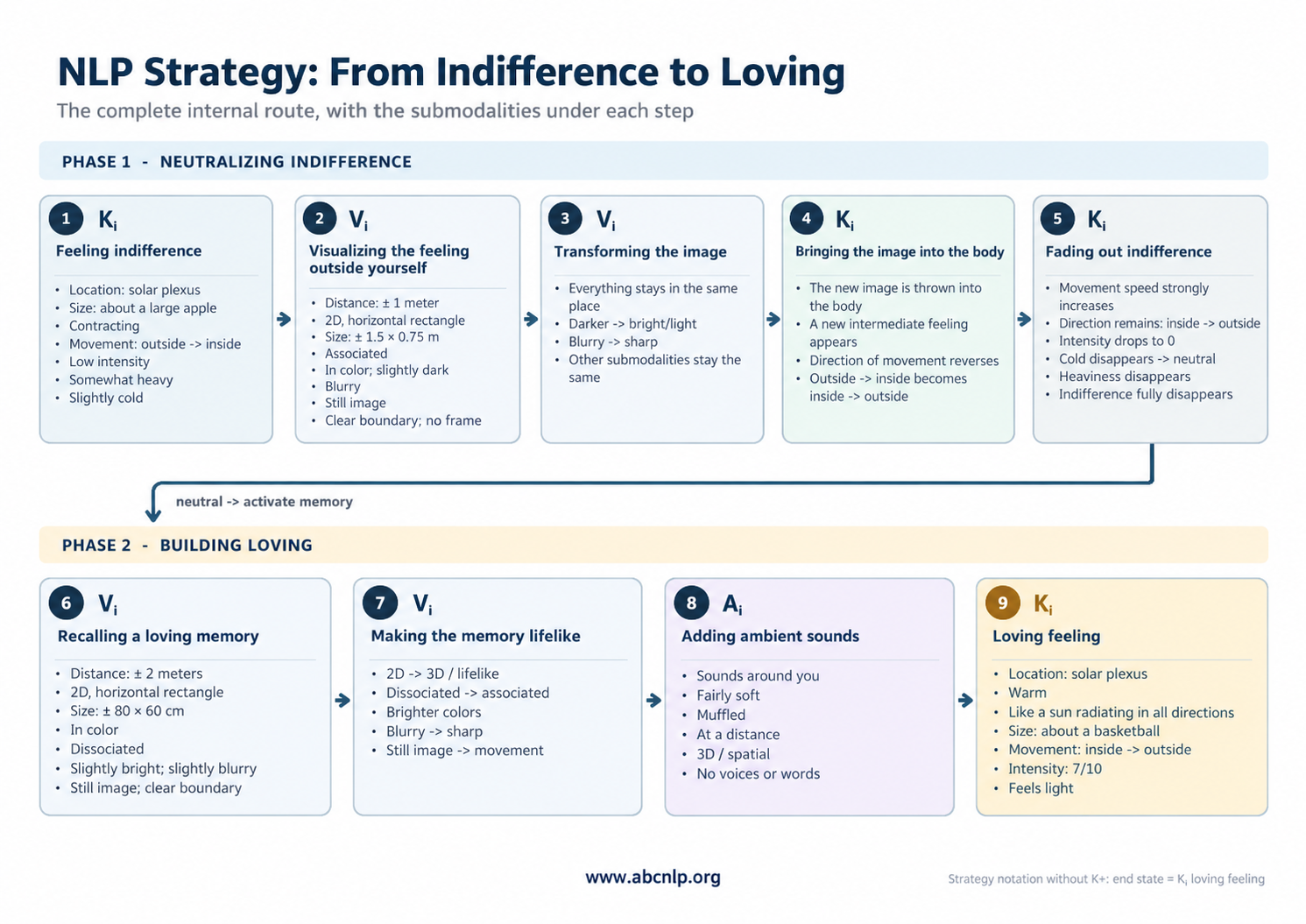
Neuro-Linguistic Programming (NLP) is, at its very core, a method for mapping human behaviour. In the psychology of the 1950s and 1960s, Applied Behaviour Analysis was the dominant scientific approach. As its name suggests, it primarily analysed behaviour and, in practice, only externally observable behaviour. This began to change during the 1960s, particularly under the influence of cybernetics. People increasingly came to view the human being as a computer. In 1970, the year NLP was born, mapping human behaviour was therefore still a major focus, and Richard Bandler devised a different way of doing this that made human behaviour look more like a computer program.
Today, we call this way of mapping human behaviour “eliciting NLP strategies”. One of NLP’s basic presuppositions is that everything human can meaningfully be reduced to the five senses. This is a basic presupposition because NLP maps all human behaviour in terms of the senses involved in that behaviour. For example: I see someone I like, and then I feel good. As you can see, alongside externally observable behaviour, NLP also describes internal behaviour that only the individual can observe: their own subjective experience.
Because NLP allows you to map human behaviour, you can expand it to include anything people do. Over the past fifty years, NLP practitioners have therefore mapped all kinds of things and added them to NLP. As a result, NLP is continually being updated, and its current version differs from the version taught in the 1980s or what was done in the 1970s. So, when looking for an NLP training programme, make sure you check which version is being taught.
One of the major misconceptions within the NLP community is that you can simply add anything to NLP as long as it works. This is a serious mistake. Although NLP can be expanded to encompass all human behaviour, that behaviour only becomes NLP once you have mapped it and turned it into an NLP strategy. Simply copying something is not NLP. NLP requires you first to turn whatever you want to add into an NLP strategy. You often see NLP training programmes attempting to incorporate approaches such as EMDR, systemic work or family constellations. However, this is not proper NLP, because the step of mapping these human behaviours as NLP strategies has been skipped. Moreover, those doing this rarely know how to map an NLP strategy correctly, let alone optimise it. After all, one of NLP’s main claims to fame is that it can not only map all human behaviour but also optimise it, often by adding hypnosis.
Requirement #1 that NLP sets for itself: make sure everything you do within NLP has been mapped as an NLP strategy or an NLP technique, which is an abstracted NLP strategy.
The Meta Model
Although our example of an NLP strategy clearly concerns the senses, there is, of course, a great deal of human behaviour that, when you ask a layperson to describe it, appears to involve no senses at all! To identify which sense is involved in a particular step, NLP uses the Meta Model. The Meta Model describes how to ask questions that uncover details that have been omitted, distorted or generalised.
The Meta Model consists of twelve rules for clear communication. When you apply these twelve rules, you communicate to clarify. Alongside communicating to clarify, there is also communicating to influence. When influencing, you deliberately and consciously violate these twelve rules. In this context, anything goes, provided your communication achieves your goal. This leads poorly trained NLP trainers to believe that they can not only copy anything without question but also say whatever they like.
The reality is precisely the opposite: when you are clarifying, you must follow the twelve rules of the Meta Model. If you do something else, you are no longer clarifying; you are merely influencing. During NLP training, it is essential that you, as a participant, gain a clear understanding of how NLP works. Every NLP trainer must therefore be able to explain NLP without violating the rules of the Meta Model. Unfortunately, this is rarely the case. In most NLP training programmes, you therefore do not learn NLP; you are merely influenced to have a good time. This is also what you repeatedly hear from people who have completed NLP training. They all say the following: “I really enjoyed the course. I gained a lot from it, and the trainer was very inspiring. But what do you actually do with it after completing your NLP training?”
Requirement #2 that NLP sets for itself: a manual or protocol is only part of NLP if it does not violate the rules of the Meta Model in any significant and relevant way.
When you keep these two requirements in mind and then look at everything taught under the label “NLP”, you may be shocked. Much of what is taught as “NLP” violates these two requirements and is therefore not NLP at all!